Period: A few terms at Kungsholmen, Stockholm, in the 1930s3 min readPublished:
Two Remark Books, Two Forgeries, and One Invented Crime
A Kungsholmen schoolboy in 1930s Stockholm dropped a ruler and got a written remark that needed his father’s signature. His solution needed far more work than behaving.
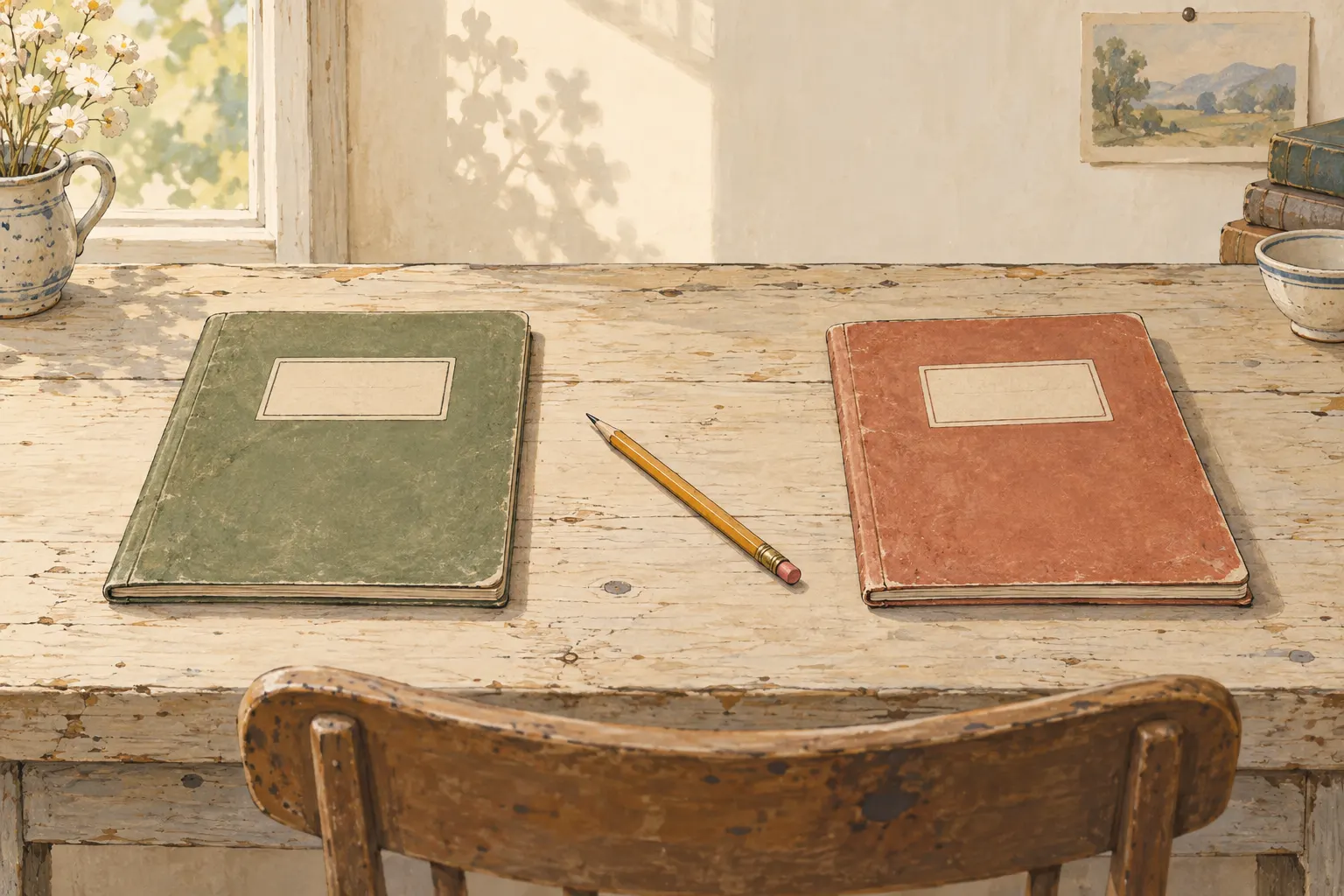
At the Kungsholmen school in Stockholm in the 1930s, a dropped ruler could end up in writing.
One boy found this out on the way to his desk. The ruler slipped, clattered on the floor, and the teacher reached for the remark book: a slim notebook in which complaints were written down, to be taken home and returned with a parent’s signature. At other schools, the boys on his bench agreed, you got spoken warnings first. At Kungsholmen you got the pen.
He took the book home. His father signed. That is the last straightforward thing that happens in this story.
The second remark was for a homework sum he could not do. He looked at the page, pictured his father’s face, and told the teacher he had lost the book. A new one was issued.
Now he had two.
What he built with them deserves to be studied by accountants. The school copy carried his father’s signature, forged by the boy himself. The home copy carried the teacher’s name, also forged, and almost nothing else. Each reader got the edition they were expecting.
Then came a problem every forger eventually meets: credibility. A remark book with nothing in it is suspicious, and a son who never annoys anybody is not a son any parent recognises. So every so often he sat down and invented a small misdeed, wrote it into the home book and presented it for signature with exactly the right amount of shame.
It would have been much less work to be good, but being good does not come with a filing system.
I have a professional respect for this, as a parent who runs a household on three calendars, two shared spreadsheets and a whiteboard nobody reads. Our planning system has more versions than his remark books did, and it is less internally consistent. Last month the middle one discovered that the paper calendar on the fridge and the family app disagreed about a dentist appointment, and simply went with the one that did not have a dentist in it. When challenged, she said she had “followed the documentation”.
The Kungsholmen boy told this story for the rest of his life, including in a magazine in 1954, and it was a reliable laugh. Like every good family legend it ends with both books on the same table, the honest one and the one that only looked honest, and a father who said nothing for an unbearably long time.
The middle one, meanwhile, has been put on a single calendar, which I control. She has asked to see the remark book I keep about her. I told her there is no remark book.
She asked which one I meant.
About this story: the scenes and dialogue are imagined or freely retold. Facts about the schools mentioned come from published sources, which our school profiles cite.