Period: A founding workshop in 1970, and a school journey several years later3 min readPublished:
No Rules for Years, Then a Duckling Boarded the Coach
The British School of Brussels opened in 1970 with a principle instead of a rulebook. It held for several years, until a Year 6 boy came back from a market carrying a box.
The British School of Brussels opened in 1970 without a list of rules, and lasted several years before it needed one. The first one, when it came, was about livestock.
Before opening, the headmaster had his six new teachers round to his house for a day of talking about what the school would be. They came out with a principle instead of a rulebook: respect for people, for property and for time. Pupils, staff and parents could argue about it whenever anyone felt it was being bent. One of the six remembered it as the most exhilarating day of his career.
I live in Brussels. I have tried a principle instead of rules at home. It lasted until about half past four on the first day, when the middle one argued that respecting her own time meant not emptying the dishwasher.
The school’s principle did better. It held right up until a school journey several years later, and a Year 6 boy with some pocket money, a market stall and a cardboard box.
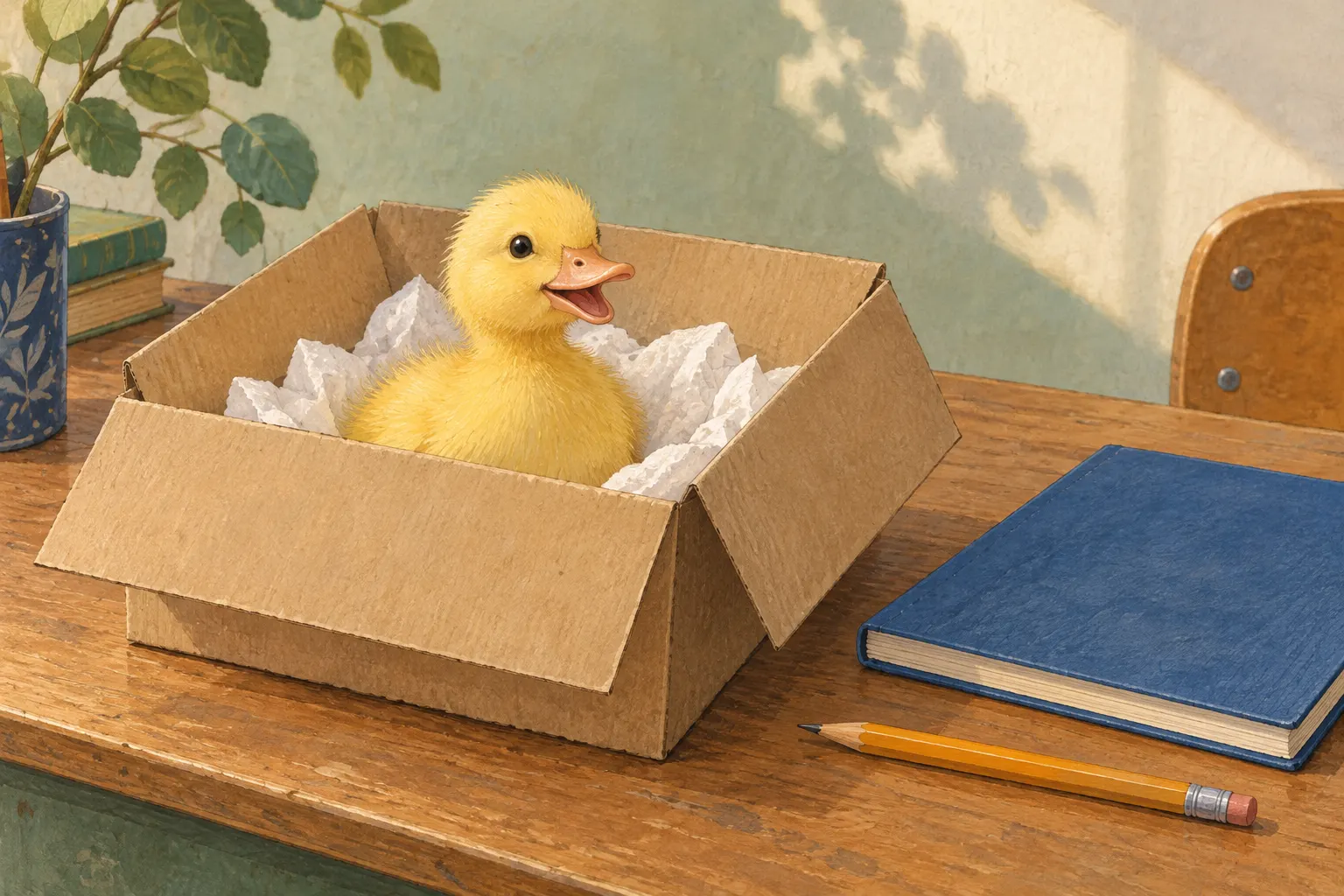
In the box was a duckling.
You might expect panic, mess or a child in tears. What the teacher in charge found was a plan. The boy had bought tissues, to keep the box clean. He had bought food. He had thought about water. He had considered the journey home. He loved animals and had made every arrangement a duckling could reasonably require on a coach.
Measured against respect for people, property and time, he was hard to fault. He had kept the box clean, kept the duckling fed and kept the problem off everyone else’s hands. He had applied the school’s founding principle to a case the six founders had not quite anticipated in the headmaster’s sitting room.
The school had not needed a rule for years, and the first one it got was about ducks. The teacher announced it to the coach: no animals are to be purchased on any school visit.
Back in Brussels he then gave an assembly on the rules governing the movement of livestock across European frontiers, with reference to health and hygiene. He later described it as riveting, and I believe him, because I once spent forty minutes explaining Belgian residence registration to my husband, and he described that as riveting too, from behind a newspaper.
Our own house rules now run to two pages, stuck to the fridge. Rule 14 says no pets without a family vote. Rule 15 says the family vote does not include the dog next door.
Last Saturday the youngest came back from the Jeu de Balle flea market with a shoebox, a packet of tissues and a look I recognised from a story about the British School of Brussels.
It was a hamster. She had bought hamster food. She had read the rules. She asked, very politely, which one she had broken.
About this story: the scenes and dialogue are imagined or freely retold. Facts about the schools mentioned come from published sources, which our school profiles cite.