Period: Danish schooldays, recalled in a 1927 memoir3 min readPublished:
Carl Nielsen Trod on a Foot and Became a General
In his 1927 memoir of a Funen childhood, the composer Carl Nielsen recalls the road war between two villages, a scarf that made him look like Napoleon, and a battle plan that lasted seconds.
Inside the village school at Nørre-Lyndelse on Funen, the children were at peace. The teacher, Emil Petersen, kept excellent order, and Carl Nielsen remembered him with gratitude in his 1927 memoir of his childhood.
Outside, on the road home, there was war.
After school the children split in two. One party walked towards Lumby and Freltofte, the other towards Lyndelse and Sortelung, and it often came to real battles with stones, clods and rotten branches. Nielsen’s best guess at the cause was that his side walked home on the right and the others on the left. As reasons for war go, it is at least easy to remember.
His side’s commander was Rasmus Offer, older, clever and splendid. Nielsen, who had been told he was a glum boy who hardly spoke, served under him as a private. Then things went badly. The enemy recruited older boys who had long left school, and Rasmus sprained his foot.
The boys gathered round the wounded general in his father’s garden. One reported a new insult from the other side. Was there nobody, Rasmus demanded, who would lead them and give the enemy a proper hiding?
At that moment Nielsen trod on the bare foot of the boy beside him. The boy shoved him. Nielsen shot forward, and Rasmus took him for a volunteer.
He had been promoted to general for stumbling, and he had a scarf to prove it.
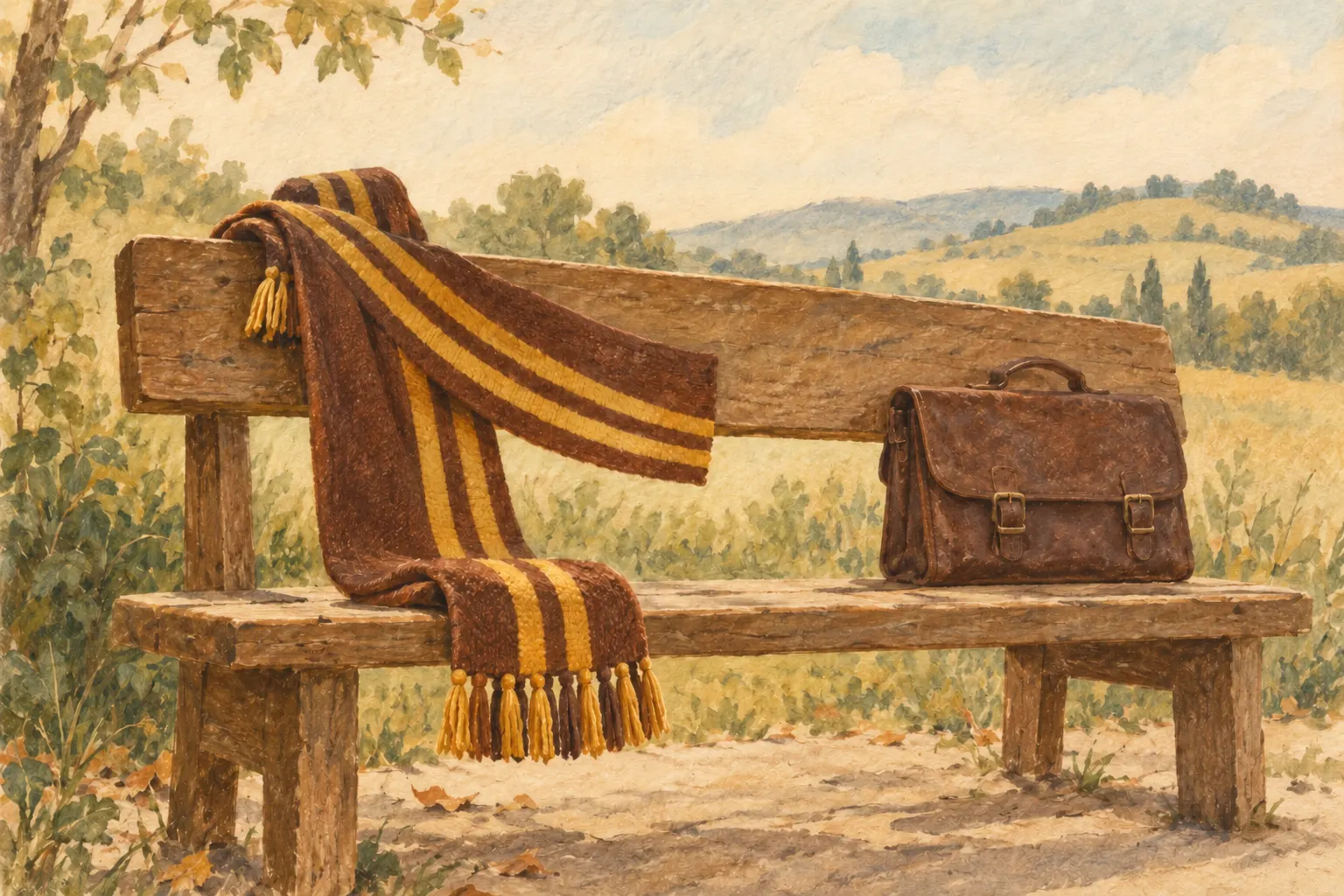
The scarf was brown, with yellow stripes and tassels. Worn with the ends over one shoulder, it gave him, he decided after a good look in the large mirror at the vet’s, no small resemblance to Napoleon. His confidence grew accordingly.
His battle plan involved a boy from Sortelung barking like a dog to provoke the enemy, a feigned retreat up the hill, and six boys hidden behind the hedges, three each side, armed with clods. The plan’s weakness was that it required the enemy to chase. On the day, both sides went straight to hand-to-hand fighting, nobody retreated, and the barking boy never got to bark.
The six in the hedges, luckily, used their own initiative and came down the hill raining clods. The enemy fled. Nielsen, by his own account, could not believe Napoleon had felt prouder at Austerlitz.
I have studied this campaign closely, as the mother of three children who conduct a similar war on the back seat of the car, over the armrest. Our cause of war is also positional: who sits on the left. I once attempted a peace plan with a rota, a chart and a sticker system. It required both sides to retreat.
Nobody retreated. The youngest barked.
The chart is still on the fridge. The eldest now wears my scarf in the car, over one shoulder, and gives orders.
About this story: the scenes and dialogue are imagined or freely retold. Facts about the schools mentioned come from published sources, which our school profiles cite.