Period: Swedish childhood, recalled in a 1922 memoir3 min readPublished:
Father Played Bellman, and Nobody Told the Children
In her memoir of Mårbacka, Selma Lagerlöf remembers the evenings her father sat at the piano and called the children to sing. Nobody ever told them how it sounded.
“Come now, children, we’ll sing Bellman.”
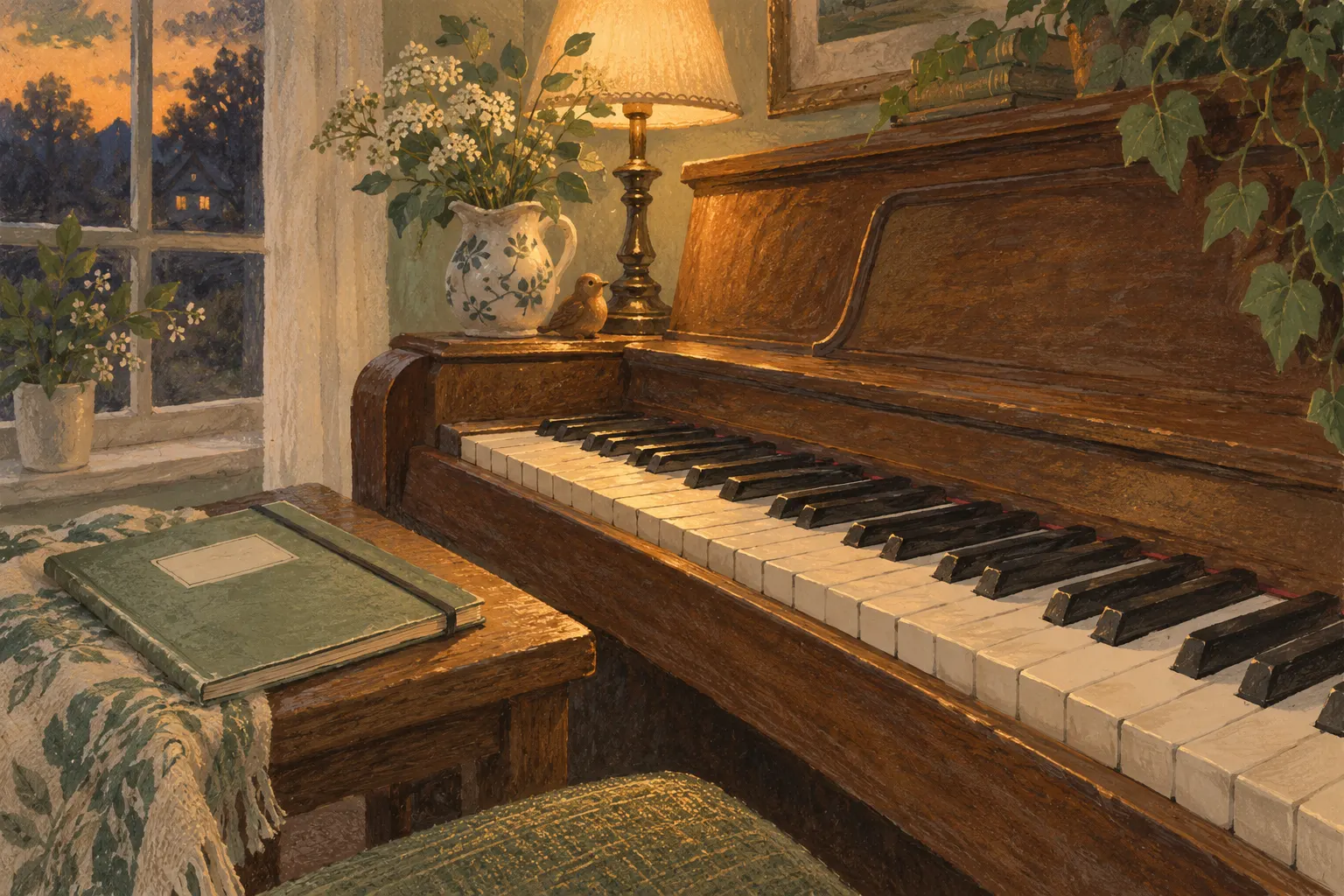
That was the invitation, in Selma Lagerlöf’s memoir Mårbacka, that the children of the Värmland estate never needed to hear twice. After supper their father, Lieutenant Lagerlöf, would sit at the old piano and strike a few chords, and the small girls came running to sing the songs of Carl Michael Bellman.
It had been a long, well-ordered day. Lessons in the nursery at a big black table, with a governess. In the evening their mother taught them to sew, crochet and knit stockings, and when the work went well she paid them in Hans Christian Andersen stories, “The Wild Swans” among them. A governess taught sums. A mother taught stockings and paid in swans.
Then Bellman, and Bellman was the release. The lieutenant hammered out the accompaniment and hummed to keep the tune. The children sang at full throat, loud enough to be heard through the whole house. He supplied the accompaniment, and they supplied the volume.
The best of it, Lagerlöf says, was that they could sing as loudly as they liked. He never corrected them. He never troubled them with the existence of things like harmony. They were entirely convinced they were singing Bellman as he ought to be sung.
They were not.
One evening a guest, von Wachenfeldt, sat in his corner by the tiled stove while Aunt Lovisa whispered to him. Was it not remarkable, she said, that none of the children had a voice? They could not help that, he replied, but they might at least use their ears. Aunt Lovisa could not understand how the lieutenant stood it.
He did not hear it the way they did, said von Wachenfeldt. He loved the children more than anything.
“Perhaps there is also such a thing as hearing with the ears of love,” said Aunt Lovisa.
One of the small singers overheard, and told the others. The Bellman evenings, Lagerlöf notes, gradually died away.
I would like to report that I have the lieutenant’s ear. I do not. I have the aunt’s. When the youngest performs “Let It Go” in the bath, at volume, every evening, I hear every note she misses, and I hear them through two floors and a closed door.
My husband has the lieutenant’s ear. He claps. He requests encores. He says she has “real presence”, which is true in the sense that the neighbours have confirmed it.
So far nobody in our house has overheard anything. I am keeping my aunt’s opinions for this column, which the youngest cannot yet read. When she can, I am told, there will be an inquiry. Until then the bath concerts continue, and the lieutenant, in our version, plays the shower.
About this story: the scenes and dialogue are imagined or freely retold. Facts about the schools mentioned come from published sources, which our school profiles cite.