Period: Two or three growing seasons at the American School of Madrid3 min readPublished:
The US Embassy Came to Learn Composting From Schoolchildren
The American School of Madrid had a greenhouse built for a teacher who then left. A gardener from Houston turned it into a club, and eventually the diplomats came to take notes.
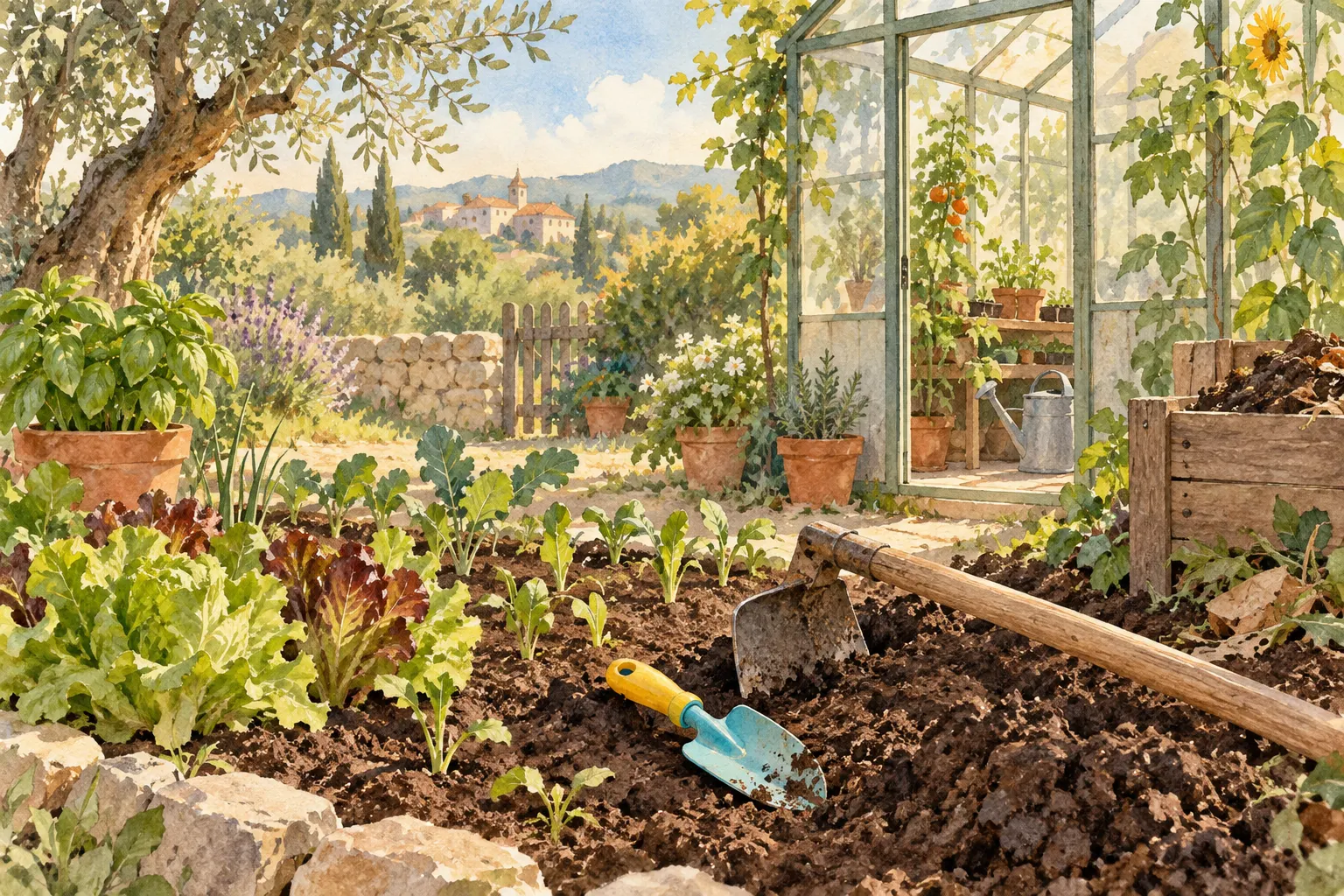
The American School of Madrid once had a greenhouse built for a teacher who was keen on growing things. Then the teacher moved on, as teachers at international schools do, and the greenhouse stayed behind, next to a plot that had been dug once and then left.
Here is how it came back to life, in numbers.
One gardener: Casey, from Houston, who had been working on a farm outside Madrid and looked at the empty corner of campus as land not being used, which for some people is physically painful.
One after-school club, in which the ground was like concrete, the children’s tools were plastic and Casey did the real digging with a real hoe.
Several crops: mint, rosemary and lettuce, some of it eaten by something else first.
Three compost bins, built with fences and an irrigation line by older pupils in technology classes. The maintenance staff contributed grass clippings. The cafeteria contributed vegetable scraps. The teachers contributed coffee grounds, the one resource no school will ever run short of.
One phone call from the United States Embassy. Its Green Team, staff trying to make the building greener, wanted to learn about composting and had heard that the school knew how.
One visit, during which the diplomats brought fruit trees and berry bushes as a gift and were then taught by the children. The garden club turned the compost, explained the sieve and showed adults how to hold a hoe. Then, because farmers share, the children loaded their guests with lettuce, onions and herbs. The embassy staff went home with fruit-tree receipts, ruined shoes and a salad.
One circle at the end: children, teachers and diplomats, dirty hands in the middle, saying together that without farmers there is no food.
I have tried composting. In Copenhagen I bought a worm bin for the balcony, on the theory that it would teach the children about the cycle of life. It taught them about the cycle of life very quickly. The worms escaped in week two and were found, a few at a time, for most of the following month, in places I prefer not to list.
The youngest still brings it up when anyone mentions nature. She told her class in Brussels that her mother “killed a whole farm”, which is not true. It was one bin. I did not kill them. They left.
If the US Embassy would like to learn about worm management, I am available. I would bring lettuce.
About this story: the scenes and dialogue are imagined or freely retold. Facts about the schools mentioned come from published sources, which our school profiles cite.