Period: A childhood tale, published 18773 min readPublished:
Half a Riksi to Learn Writing, Gentlemen’s Letters Not Included
In Pietari Päivärinta’s 1877 memoir, a lodger’s son in rural Finland is promised a writing lesson with a pass mark, and asks the one question his teacher cannot answer.
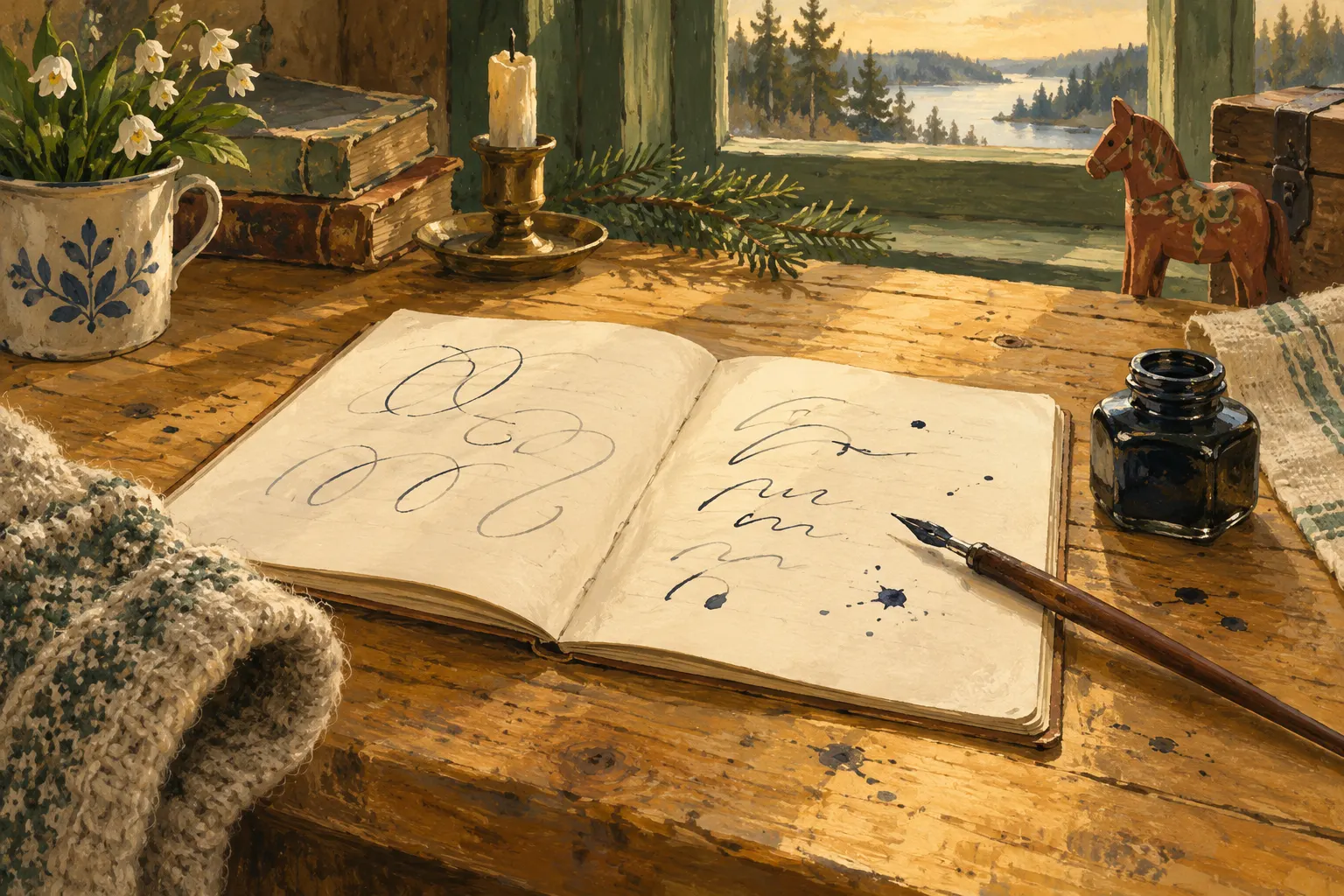
“When you teach that boy of ours to write, Junnu, I’ll pay you half a riksi.”
That is the father in Elämäni, My Life, Pietari Päivärinta’s autobiographical tale of 1877. The boy, called Pekka in the book, is the son of lodgers in a Finnish farmhouse, and half a riksi is real money. Junnu is a boy in the same house and one of the best pupils at the pastor’s school. He asks, reasonably, whether the father really means to pay. Yes, says the father: as soon as the boy writes something legible.
It is a contract with a pass mark in it. I have been offering versions of it to my own children for years, at a much worse exchange rate, and nobody has ever once asked me to put it in writing, which in hindsight was the trap.
Pekka is thrilled. Writing looks easy: a pen, paper, a certain amount of squiggling. The squiggles only have to be the kind other people can read.
He works at the alphabet and the numbers all day and brings them to Junnu in the evening. Junnu is not impressed. The capital K and R face the wrong way. The 2 is upside down. The 5 and 7 are back to front.
Pekka had been trying as hard as he could. He had been careful and backwards at the same time, which is a combination I know well from the kitchen table.
The next evening everything faces the right way, and, glowing, Pekka asks the question of the month. Why are there two Ps, two Ts and two Ks? Some letters come in pairs.
“Because gentlemen keep some letters and peasants keep others,” says Junnu.
Päivärinta, looking back, suspected that Junnu said so because he did not know the answer. I recognise the move. When the youngest asked me why “Wednesday” has a d in it, I told her it was Belgian.
Pekka pushes: why should gentlemen have different letters? Junnu explains that gentlemen are different anyway: easier days, better food, better clothes, and they are learned. Pekka has seen the gap between his family and the gentry with his own eyes, and against that, separate letters do not seem the strange part. He is a little ashamed to have asked.
A month later he writes his name, in his own hand. His parents are delighted. Junnu gets his half riksi, a sum the family can barely spare.
And then the newly literate boy writes on snowdrifts and on book covers, and his parents, too proud of a son who can write to stop him, let him. The scribbles, the grown author reports, are still there, and do their maker no credit whatsoever.
The youngest has written her name on the inside of my passport. I asked why. She said it was for gentlemen.
About this story: the scenes and dialogue are imagined or freely retold. Facts about the schools mentioned come from published sources, which our school profiles cite.