Period: A school year in Bucharest3 min readPublished:
Nine Years Teaching, Then a Desk at the Back
A teacher in Bucharest left her job to sit beside her autistic son in eighth grade. The class she had once taught had other plans for her.
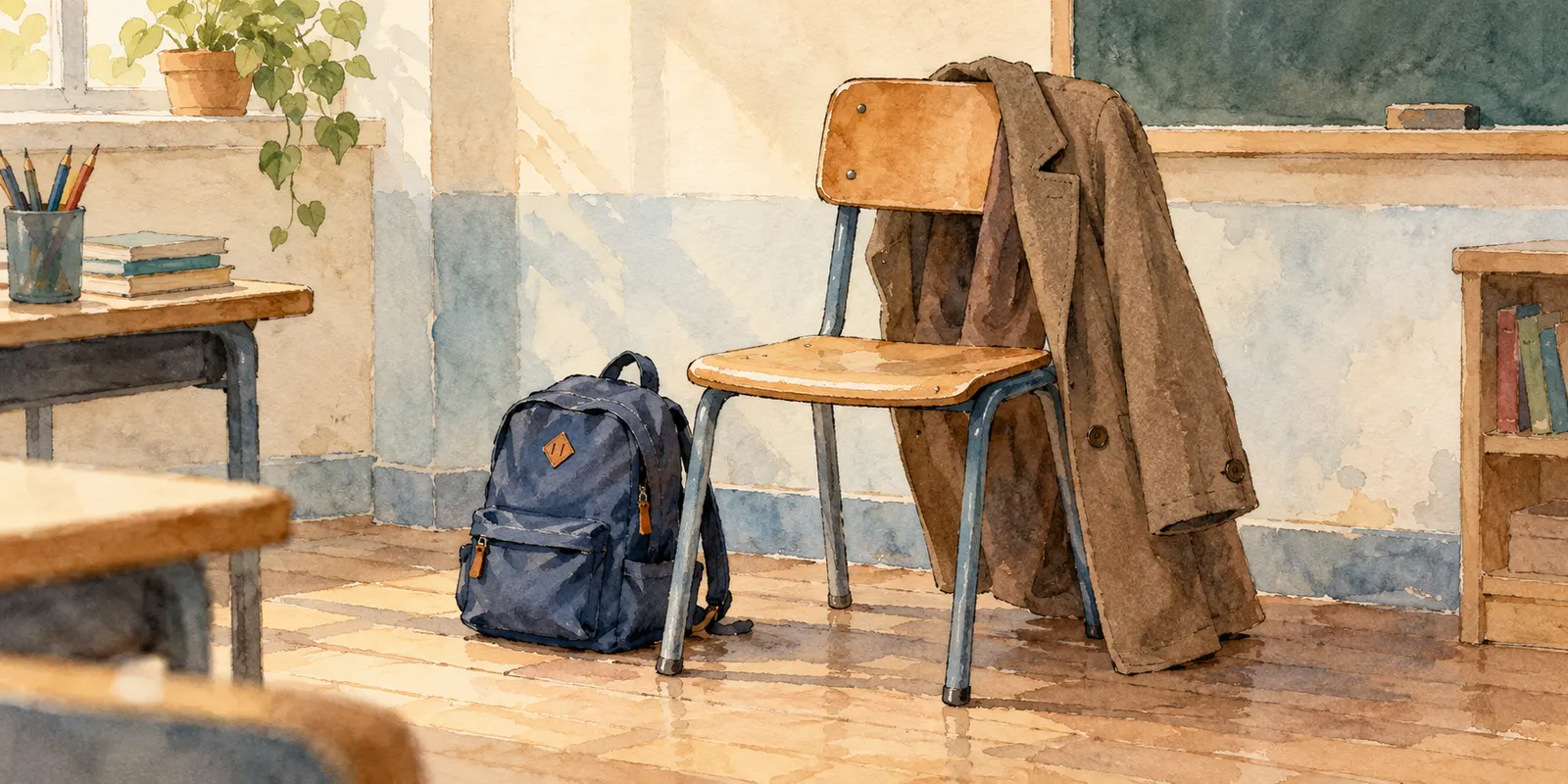
A teacher in Bucharest had taught at her school for nine years when her son, who is autistic, reached the stage where every lesson brought a new teacher, a new voice and a new set of unspoken rules. What he needed in the room was an interpreter. She took unpaid leave. When the leave ran out, she left teaching.
She did not leave the building. She moved to the desk at the back of the class.
It is a strange thing to be the only person in a classroom who has already passed the year.
The eighth-graders around her were children she had taught when they were small. Several were now taller than she was, and mentioned it. And the old arrangement, it turned out, had never been formally ended. Before the first lesson, a queue formed at the back desk: homework to check, secrets that could not wait for break, a football argument requiring a ruling from an adult they trusted.
She could keep a confidence and correct a comma at the same time, and the children did not see any contradiction. Nor do I. It is the job description of every good teacher, and of most parents on a good day.
In the park after school the class still took her down the slides, as they had when they were seven. Their music she could not follow. They looked at her with the gentle pity the young reserve for the old.
I have been to a lesson in my own children’s school exactly once, for a parents’ open morning in Brussels, sitting at the back of the middle one’s geography class. Within ten minutes I had put up my hand to answer a question that was not addressed to me, and got it wrong. The capital of Australia is not Sydney. I know this. I knew it at the time. It was the pressure.
The middle one did not speak to me until the following Tuesday. The geography teacher, at the next parents’ evening, asked warmly whether I had “looked up Canberra”.
So I have nothing but admiration for a parent who can sit at the back of a class all year, in every subject, without once putting her hand up. That is a discipline beyond most of us.
What the Bucharest class understood, without being told, is that she had never really stopped being their teacher. She had simply moved further back. Nobody asked her to; the queue formed anyway.
The middle one has made it clear that I may not attend another open morning. If I must, she says, I am to sit in the corridor. I have offered to bring a notebook. She has offered to bring a map of Australia.
About this story: the scenes and dialogue are imagined or freely retold. Facts about the schools mentioned come from published sources, which our school profiles cite.